
Solensia: What I Know Now
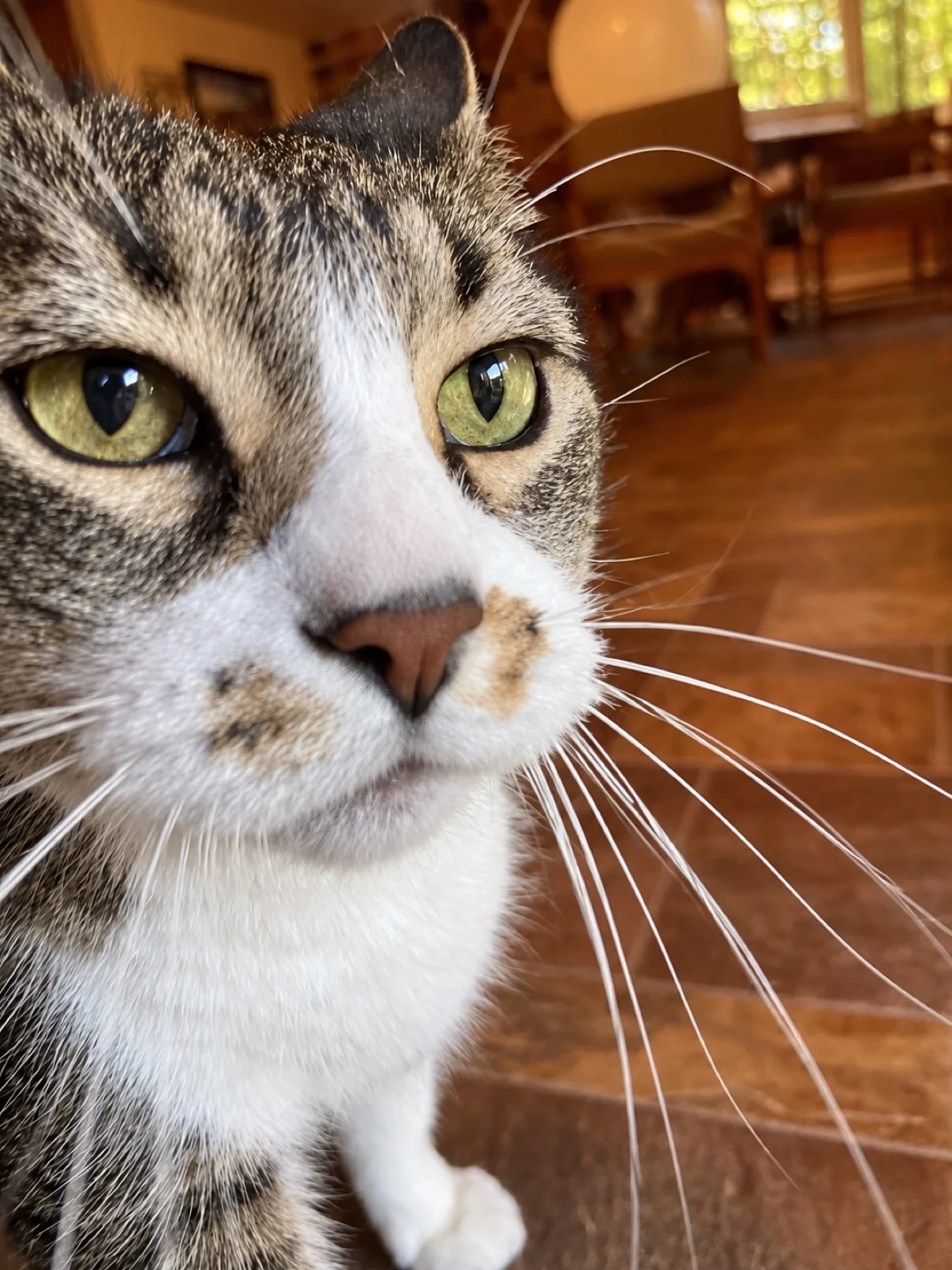
A few months back, I wrote a glowing review of Solensia after watching what it did for my senior cat, Hope. I meant every word.
Hope was 13, and arthritis was catching up with her. She'd hesitate before jumping, move slower, and she'd quit doing some of the things she used to love. Then she started Solensia, and she improved quickly. Within a few weeks she was jumping again. She moved easier and seemed more like herself. I remember thinking I'd gotten a younger version of my cat back. That happened. I stand by it. But I wouldn't write that article the same way today.
First, what Solensia actually is
I didn't understand this when Hope started it, and I think most owners don't either. Solensia is not a pain pill. It's a completely different kind of medicine, and the difference matters.
Your cat's immune system already makes antibodies. They're proteins shaped to grab onto one specific thing, like a key cut for exactly one lock. Solensia is a lab-made copy of a single antibody, mass-produced so every dose is identical. That's what "monoclonal" means. One clone, over and over.
A protein that looks foreign to a cat would get attacked by her immune system, so the molecule is engineered to look feline before it ever goes in a syringe. That's why you'll see Solensia called a "felinized" antibody.
What it grabs onto is something called nerve growth factor, or NGF. Arthritic joints crank out extra NGF, and NGF turns up the volume on pain signals headed to the brain. Solensia catches NGF and neutralizes it before that can happen.
Here's the part I wish someone had spelled out for me. Solensia does not treat arthritis. It doesn't rebuild cartilage, doesn't reduce inflammation, doesn't slow the disease down. It turns down a pain signal. The arthritis keeps doing what arthritis does. Your cat just stops feeling as much of it.
Why it's a shot and not a pill
Antibodies are proteins, and your body treats swallowed protein as food. It would break the drug down in the stomach before it ever reached the joints. That's why Solensia has to be injected.
They also don't get processed the way pills do. A pill goes through the liver and out through the kidneys. An antibody gets broken down into amino acids and recycled, more or less the way the body handles any protein. That's why this class of drug looked so promising for cats like Hope. Old arthritic cats usually have kidneys that are already struggling, and the traditional anti-inflammatories are hard on kidneys. Here was a pain drug that seemed to sidestep the problem.
Nobody mentioned the flip side to me, and it's the thing I most want you to know.
A pill, you can stop. Bad reaction on a Tuesday, you skip Wednesday's dose, and it clears out. An injected antibody doesn't work like that. It's designed to last about a month, which is why the shot is monthly. There's no antidote and no way to pull it back out. If something goes wrong, you wait. That's the whole treatment plan.
I said yes to that shot without understanding it, and I'd guess a lot of owners do.
What I found when I went looking
The FDA keeps a running tally of problems that vets and pet owners call in about any animal drug. Anybody can request those records. So I did.
Between January 13, 2022 (the day Solensia was approved) and June 30, 2024, the FDA had received 3,882 reports of problems in cats given Solensia. That count keeps growing as more cats get the drug. By the end of 2025, the running total was over 7,000.
What's in those reports: cats who couldn't walk straight or seemed wobbly and uncoordinated. Cats with weak or paralyzed back legs. Cats falling over. Seizures. Cats who couldn't stand up on their own. Kidney numbers going the wrong way, and kidney failure. Cats who stopped eating, got lethargic, threw up, had diarrhea, or developed scabs and itching. Cats who died, and cats who were put to sleep.
A TV station in Atlanta, WSB, requested the same records and reported that 333 of those cat reports involved a death.
Hope is now having trouble walking.
Before you panic, here's what that number isn't
I want to be straight with you, because a big number like 3,882 is easy to read wrong. A report to the FDA is somebody saying "this happened to my cat after the shot." It is not a finding that the drug did it. The FDA says this plainly: they haven't determined that the drug caused what got reported.
You also can't turn that number into a percentage, and the FDA says so too. To know how often something happens, you'd need to know how many cats got the shot in the first place. Nobody publishes that. Zoetis, the company that makes it, says millions of doses have been given. So 3,882 out of an unknown number doesn't tell you as much as it seems to.
Reports also pile up faster when a drug is in the news. The Wall Street Journal ran a story in April 2024 about pet owners blaming these drugs, and coverage snowballed from there. More people hearing about it means more people calling it in, and that alone pushes the count up.
And cats on Solensia are arthritic cats, which means they're old cats. Old cats get kidney disease. Old cats lose weight and stop eating. Old cats die. Some of what's in those reports is that, and not the drug.
So no, I can't tell you Solensia is behind Hope's decline. But when you're watching your own cat struggle to walk and then read that exact symptom on a list, it gets your attention.
Something about the label that surprised me
Every prescription drug comes with a label, that folded-up sheet of tiny print. The side effects listed there come from the company's own study, done on a small group of animals before the drug went on sale. For Solensia, that study followed a few hundred cats for about four months. Vomiting was the most common problem, showing up in roughly one in eight cats. A sore injection site was next. Then diarrhea, odd behavior, kidney trouble, appetite loss, sleepiness, and skin problems, all less common. That's the "before it went to market" list.
Once a drug is out in the real world and thousands of animals get it, new problems come in. Some labels add a second section for that. The U.S. Solensia label doesn't have one. Canada's does. The Canadian label for the exact same drug has a section for problems reported after approval, and that list includes wobbly, uncoordinated walking and death, both marked as rare. It's the same drug, but a Canadian owner gets told more than I did.
What the commercials didn't tell you
In February 2025, the FDA sent Zoetis a letter about its Solensia ads. Not a full warning letter, a step below that, but an official complaint all the same.
The problem was what the commercials left out. They mentioned the risk to a person who accidentally sticks themselves with the needle. They never mentioned the risks to the cat. The safety information was on screen in small print, dwarfed by the big claim about how well the drug works.
That claim is worth a closer look too. The ads say 77% of cat owners saw improvement in their cat's pain.
Here's what the ads don't say. In that same study, 67% of owners whose cats got a placebo, a shot of nothing, also saw improvement.
Nine points apart.
I'm not saying the drug does nothing. Hope was clearly better, and I don't think I imagined it. But it's worth sitting with how much of what we see in our cats is us wanting to see it. We're the ones filling out the questionnaire, and we're all hoping.
Why I'm posting this
I've spent more than 13 years taking care of other people's cats, and I write about my own because I know how hard these decisions are when your cat is getting old. I don't want anyone thinking I quietly deleted something when my opinion changed.
My original review is staying up. It was true when I wrote it. This is where things stand now, and I'm not comfortable giving Solensia the wholehearted recommendation I gave it before.
If your cat is getting Solensia
I'm not telling you to stop a medication your vet prescribed. I'm telling you to ask questions and watch closely.
Things worth watching after a shot: walking and balance, whether she can still jump, strength in the back legs, appetite, drinking and peeing, personality, skin and coat, throwing up or diarrhea, and any weakness or unusual sleepiness.
And ask your vet the question I didn't think to ask. If my cat has a bad reaction to this, what can we do about it? Listen carefully to the answer.
If something changes, call your vet. If you think your cat had a bad reaction, you can report it yourself. Zoetis takes reports at 1-888-963-8471, and the FDA has its own reporting line at 1-888-332-8387. Those reports are how problems get spotted in the first place. The numbers I read only exist because people made those calls.
Where I've landed
I remember watching Hope jump again and thinking, this is wonderful. I wasn't imagining it. She really was better.
I'm also looking at a cat who's having trouble walking, reading records I didn't know existed when we started. Both of those things are true at once. I don't have an answer for that. If I were making the decision today, I'd ask a lot more questions than I did the first time.
Sometimes sharing our pets' stories means coming back later and saying there's more to it now. For Hope and me, there is.