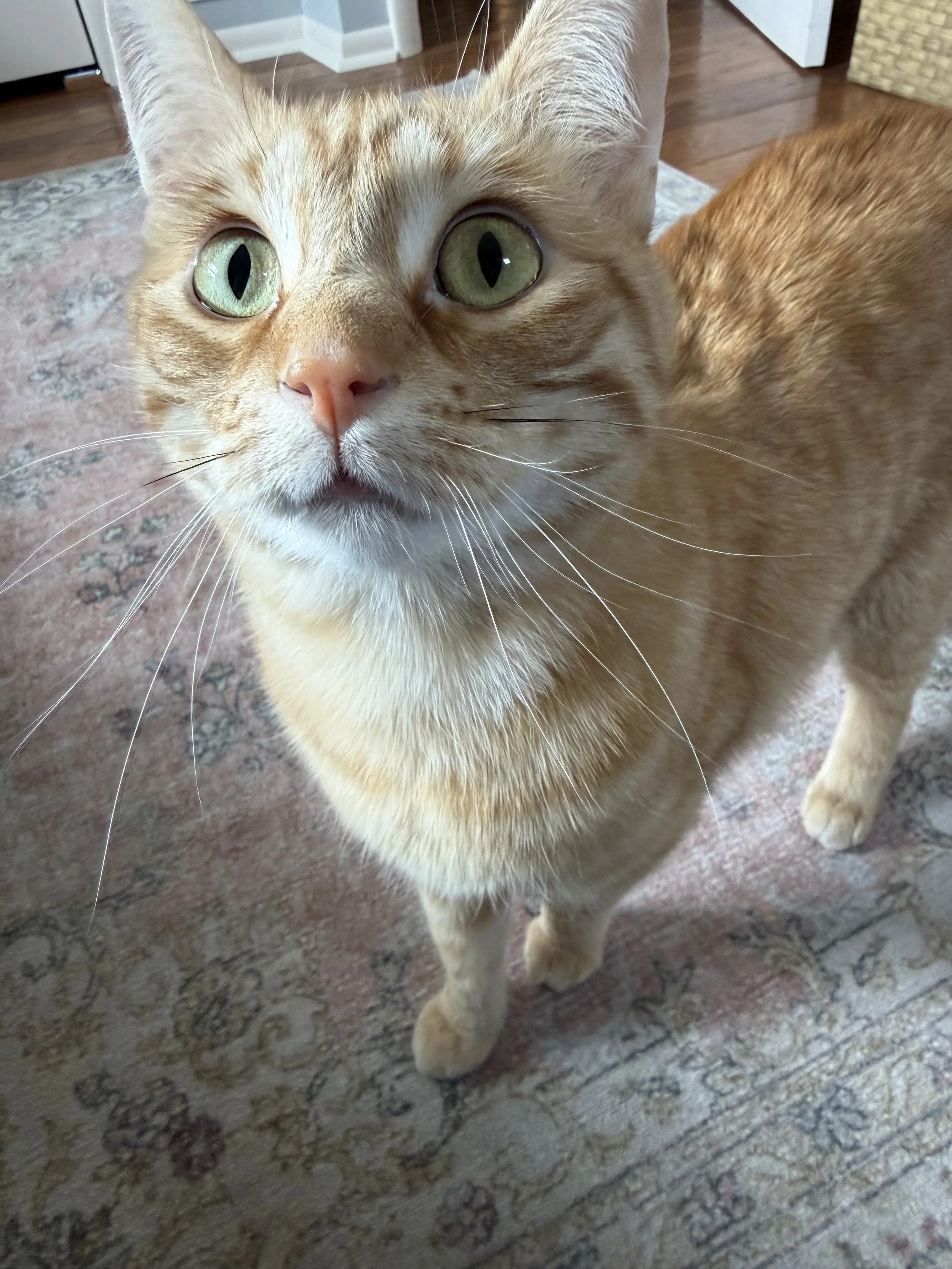
What I Look for in the First 60 Seconds of a Cat Visit
Most people think a cat visit starts with food.
It doesn’t.
It starts the second I walk through the door.
Before I touch a bowl or scoop a litter box, I’m paying attention. Because in those first few moments, a cat will tell you almost everything you need to know, if you know what to look for.
The first step inside
The very first thing I do is look down.
Always.
Because I never know where a cat might be.
I have had cats right at the door, pressed up against it, completely silent. If you are not paying attention and you step in quickly or shift your footing without looking, that is how a cat slips out.
Opening a door is probably one of the riskiest moments of any visit.
A scared or curious cat can bolt in a split second.
So I slow down. I open the door carefully. I check the floor before I move.
Nothing else matters if a cat gets out.
Where is the cat
Right after I get inside, I am already trying to locate them.
Not casually. Intentionally.
More than once, I have found a cat closed in a bedroom.
Or shut in a basement.
Completely by accident.
It happens more than people think.
Someone leaves in a hurry
A door gets pulled shut
And no one realizes it
So I don’t assume anything.
I check the usual spots. I listen. I look for movement. I make sure every cat that is supposed to be there is actually where they should be.
That matters more than food in that moment.
The feel of the house
It sounds strange, but I notice this right away.
Does the home feel calm
Or does something feel off
Sometimes it’s quiet in a normal way. Other times it’s the kind of quiet that makes you pause.
After doing this for years, you learn the difference.
The smell
This is one people don’t think about, but it matters.
A clean home with one or two cats has a certain baseline smell. When that changes, it can tell you something is wrong.
Maybe a cat is having litter box issues
Maybe they are not using the box at all
Maybe something has been missed
You don’t ignore that. You follow it.
The food situation
Before I even touch anything, I look.
Did they eat
Did they pick at it
Did they ignore it completely
Cats do not always stop eating dramatically. Sometimes it is subtle.
A little less today
A little less tomorrow
That is how problems start.
The litter box
This tells you more than almost anything.
How much
How often
Anything unusual
You start to recognize patterns. And when something changes, it stands out.
A lot of people just scoop and move on.
I don’t.
The cat
And then there is the most important part.
Where are they
How are they
Are they waiting at the door
Hiding under the bed
Watching from a distance
Acting different than usual
And to be honest, the first visit can be the hardest to read.
Because how a cat acts during a meet and greet, when their person is standing right there, is almost never how they act when I walk in alone for the first time.
Some become shy
Some become cautious
Some disappear completely
So I don’t rush to label behavior right away.
I observe. I give them space. I let them settle into who they are without their person there.
That is where the real personality starts to show.
It’s not a checklist
Anyone can come in, feed, scoop, and leave.
That is not what I do.
Those first 60 seconds are about paying attention. About noticing small changes before they become big problems.
Most of the time, everything is fine.
But when it isn’t, those small details are what matter.
And they are easy to miss if you are not really looking.
This is why I take my time. Because to me, they are never just a stop on a list.