
What Most People Get Wrong About Cats
And why it matters when someone else is caring for them
If you’ve ever thought your cat was “just being a cat,” there’s a good chance you’ve missed something important.
I don’t mean that in a critical way. Most people do.
But when you spend years walking into other people’s homes and caring for their cats, you start to notice patterns. Small things. Quiet things. The kind of things that don’t stand out until they really matter.
A cat that seems friendly but is actually stressed.
A cat that’s purring but not because it’s happy.
A cat that notices a change in the room long before we do.
Cats are subtle. And if you don’t know what you’re looking for, it’s easy to misunderstand them.
Purring doesn’t always mean “I’m happy”
This one surprises people.
Yes, cats purr when they’re content. When they’re curled up, safe, and settled. But they also purr when they’re nervous, when they’re in pain, and sometimes when something isn’t right.
I’ve walked into homes where a cat greets me with a soft purr, but something feels off. And it turns out, it is.
Purring can be comfort. It can also be coping.
So I don’t just listen for the sound. I watch the whole cat.
They are incredibly aware of their environment
Cats don’t just see their space. They map it.
They notice changes most of us would never catch. A moved chair. A different smell. A door that’s usually closed but now isn’t.
That’s why the first visit feels different than the meet and greet. The cat is taking everything in. Including me.
It’s also why routine matters so much to them. Familiar patterns make them feel safe.
Their whiskers are doing more than you think
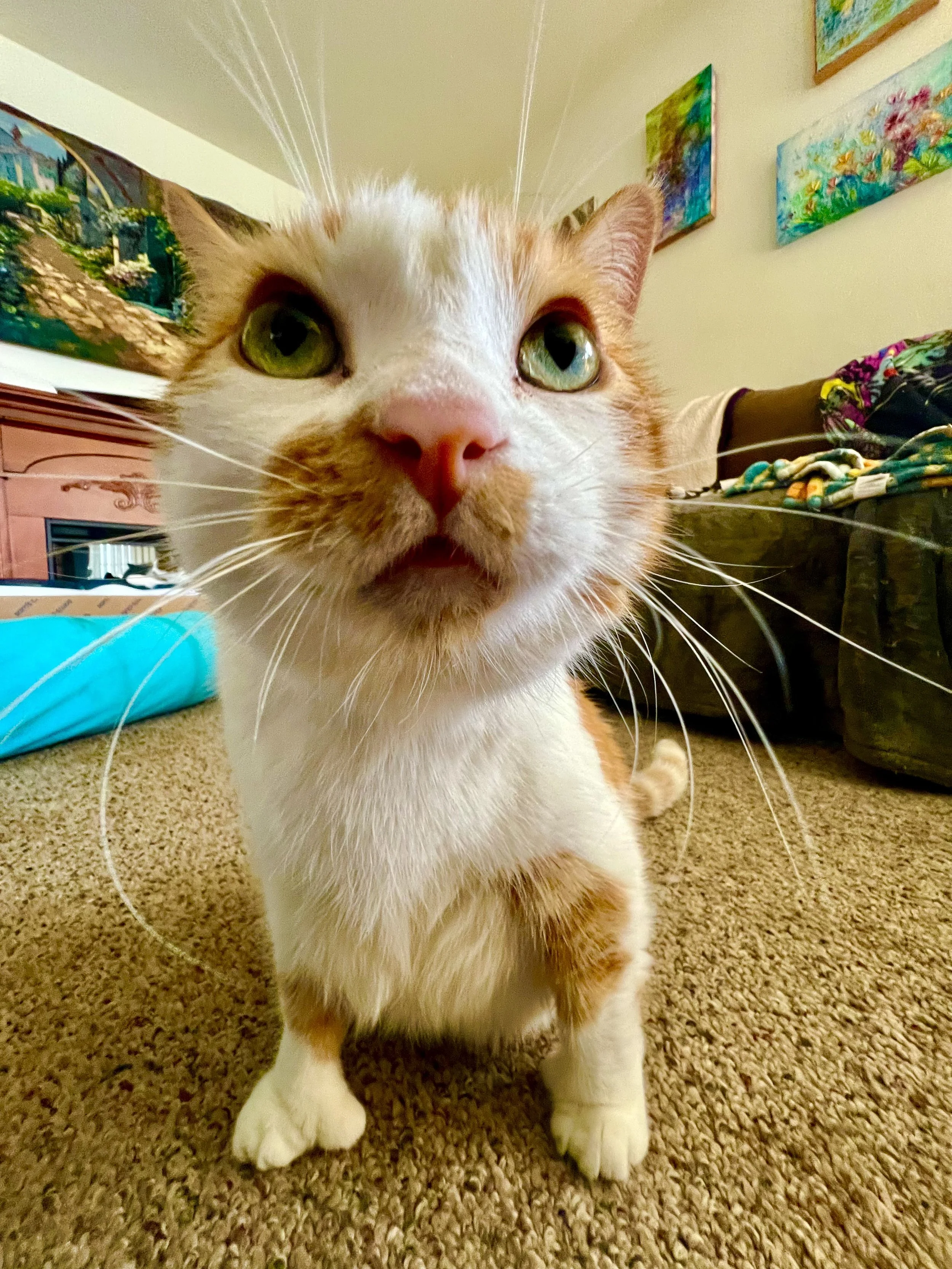
Those whiskers aren’t just cute.
They’re sensory tools. Cats use them to judge space, detect movement, and even “feel” the air around them.
What most people don’t realize is that whiskers are deeply connected to nerves. They’re incredibly sensitive. That’s why you’ll sometimes see a cat pull back if something touches them the wrong way.
I’ve seen cats hesitate at a doorway, pause before jumping, or carefully assess a new space. They’re not being picky.
They’re measuring.
And because of that, it’s never okay to cut a cat’s whiskers. It would be like taking away part of how they understand the world.
Cats don’t care about sweet treats
Most people don’t know this, but cats can’t taste sweetness.
So when someone offers their cat a little bite of something sugary, it’s not appealing to them the way it would be to us.
They’re wired differently. Meat and protein matter. Sugar doesn’t.
They see the world in motion, not color
Cats don’t experience color the way we do.
But what they do see, they see incredibly well. Especially movement.
That tiny flicker in the corner of the room? The shadow you didn’t notice? They saw it.
It’s why a simple toy can become the most exciting thing in the world.
They “talk” to us on purpose
Adult cats don’t usually meow at each other.
They meow at us.
Over time, they learn what gets our attention. Some get louder. Some get softer. Some develop very specific sounds for very specific needs.
If you’ve ever felt like your cat is training you, you’re not wrong.
They walk with intention
Cats place their back paws exactly where their front paws were.
It’s quiet. It’s precise. It’s how they’re built.
Even your house cat, stretched out on the couch most of the day, still carries that instinct.
They rely on patterns, not commands
Cats aren’t ignoring you.
They’re operating on patterns.
Feed them at the same time every day, and they’ll be there waiting. Change that routine, and you’ll see the difference.
This is one of the biggest things I pay attention to when I’m caring for someone else’s cat. I try to keep their world as predictable as possible.
Because to them, that’s what feels safe.
That slow blink means something
If a cat looks at you and slowly blinks, that’s trust.
It’s one of the most gentle, quiet ways they communicate.
Sometimes I’ll do it back without even thinking. And every once in a while, they blink right back.
Those are the moments I know I’ve been accepted.
Why this matters
When someone hires a cat sitter, they’re trusting someone to step into their cat’s world.
Not just to feed them and scoop a litter box, but to understand them.
To notice when something is different. To respect their space. To move slowly. To keep things familiar.
Because cats may look independent, but they’re deeply connected to their environment, their routine, and the people they trust.
And once you start seeing them that way, everything changes.
Sometimes the difference between a cat being okay and a cat struggling is something most people would never notice.
And once you learn to see it, you can’t unsee it.